Christmas Carols
Before school was released for Winter break, I had the opportunity to carol around campus. The last time I went caroling was back in kindergarten and all I remember was being embarrassed. However, this time I felt something different. It felt a lot more like Christmas! Also, the carols had me rethinking about why we celebrate Christmas.
While caroling I came across a familiar song I could only barely mumble out the lyrics. The song was "O' come, O' come, Emmanuel". The origin of the song is unknown but has been translated by John Mason Neale and Henry Sloane Coffin in mid-19th century. The song is a hymn rejoicing God's faithfulness to His people. Emmanuel, which also means "God is with us", is a sign God will give to Israel in time of darkness. The prophecy is fulfilled when Jesus of Nazareth is born. Thy hymn celebrates Jesus' birth and God's faithfulness to His people. Yes, in Luke 2: 29-32. Simeon praises the Lord and his promise for salvation for His people. Jesus is the God's sign to His people of Israel. He is called the Son of God. He brings peace and disperses the gloomy clouds of night.
Reflection on Discovery Week (EC)

I
went to the Philippines for my Discovery Week. I noticed that Christianity played
a big role in the community. It was amazing to observe how the Lord really
moved the hearts of the people living there. Especially when I saw
the children praising the Lord, I unconsciously started to tear up. The children always had a smile on their face. And it's so hard to believe that they went through so much, but still are able to smile. We will never be able to know what it feels like for them. What it feels like to come to a dinner table but realize there won't be food for the night. Through DW and by serving through
Him, I believe I gained an experience that I will never forget. The hard, physical labor was hard but I’m pleased with
what we accomplished. The top picture was taken in the community’s chapel. On
one of the days, the elementary school kids had a chapel. They demonstrated a
skit for us and sang praise songs.
My Shema
3 characteristics: omnipotent, knowing, caring
Personal Experience: I was riding a bicycle for the first time in my life without any safety gear on. I didn't know I was going downhill until I started to pick up a lot speed. Because I was going down so fast, I squeezed both of my breaks. I then flew and fell on a stone wall and then crashed onto the road. I wasn't able to see, hear, think, or talk properly because I hit my head on a rock. Thankfully, when I got to the hospital and took all my x-rays, I was not seriously injured.
How I remember my God: Praying every night, going to church, going to discipleship.
My Shema: My God is a knowing, loving, caring, honest, true God. No other words can explain His great and mighty power. Yet, even though I approach Him of fear because He is so powerful, I know I can still lean on Him for comfort. He is my one and only God. No other super power or force can replace Him. For He is my king, my savior, and my father.
.JPG)
.JPG)
.JPG)
Buddhist Reflection
The meditation we had during
class was an interesting experience. It was a time of peace and relieving my
tense nerves for test I was going to take next period. Fortunately, by the end
of the meditation I was at a calm state ready to take the test. However, in the
beginning of the activity, I was having a lot of trouble concentrating. It was
awkward for me to close my eyes in complete silence and concentrate on my
breathing. Unlike yoga where we move and stretch our body, we needed to sit
still and listen to the silence that resonated in the room. It was not what I
was use to doing. Always being in loud and chaotic places, I realize after the
meditation that my mind never really had a time to shutdown and recharge. It’s
always working! Through the eightfold path meditation exercise, I was able to
rest and clean my mind from all the stress that I’ve been inundating myself with.
It’s amazing to see how from step 1 to step 8 there is a huge difference in
what I’m thinking about. My first meditation thought was me constantly
reminding myself about my upcoming test. My last meditation thought was an
illusion of myself walking through a forest path. In my opinion, my thoughts
changed over the steps because of the mantras. The mantras were reminders to
concentrate on meditating. Through this activity, I learned that sometimes I
need to take breaks once in a while to rest my mind. And Buddhist meditation is
a great way to do it.
Our first walk to the Buddhism
temple was too quick. I didn’t feel like I had a full experience I could
possibly have had of the entire temple. To observe the Buddhist temple better
Sujean and I went on a hike to the Buddhist temple again. The walk there was
very peaceful. I think it was because there weren’t as many people walking with
us to the temple and it was an individual-oriented experience. When arrived at
the temple, there were fresh flowers surrounding one of the temples that
weren’t there on our first trip around. The flowers omitted a positive vibe
that made me realize how special this spiritual place is for Buddhist. Just
like how Christians would respect the church, Buddhists respect their own spiritual
sanctuary. The scent that permeated inside each temple was also one factor that
struck to me. The smell seemed to be special to the Buddhist religion. In
Bongwonsa, the colorful patterns and pictures of the temple captured the
aesthetic nature of Buddhism. I have to say that visiting the temple helped me
realize new aspects to the Buddhist religion.
(The pictures above are the pictures we took at the temple on our second trip there)
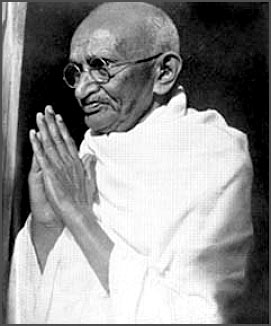
Gandhi made
his opinion on religion clear when he once said, “A religion that takes no
account of practical affairs and does not help to solve them is no religion.” He
believed any religion should be a way to help resolve problems and must be
incorporated in our lives. Throughout his life, Gandhi demonstrated core values
of the Hindu faith. When he felt the laws were unjust, in his civil
disobedience he demonstrated only through non-violence. He respected all
religions and aimed to bring unity within diversity. Especially during the
Hindu and Islam conflict, Gandhi felt it is wrong for both Hindus and Muslims
to fight against each other. Furthermore, Gandhi was also constantly
meditating, fasting, and praying to promote peace. In all, Gandhi used his
religion to end major conflicts, promote peace, and encourage others to love
their enemies.
Gandhi
stated, “A man is but the product of his thoughts. What he thinks; he becomes.”
Gandhi was not an evil person who used his guile to gain India independence. In
fact, he was the exact opposite. On the train ride to South Africa, he was
treated with disrespect and was discriminated because of his skin color.
However, he only defended himself with words and did not fight back with a fist
blow. In a meeting, he asked the Indians to fight against the South Africans in
peaceful means and not to ambush them with violence. He opposed to the Britain
in non-violent ways. When Gandhi returned to India, he noticed that the new
British restrictions being placed on Indians were unjust. Other Indian leaders
thought to resolve this problem through violent forces. However, Gandhi had
another idea in mind. He proposed an idea to fight back by spending a day of
prayer and fasting. When he wanted a riot to die down because he felt the
violence was wrong, he turned to fasting. His non-violent ways to solve dilemmas
and problems reveals Gandhi’s peaceful thoughts. The saying, ‘Actions speak
louder than words’ fits perfectly into this example. Not only did he preach
keeping a non-violent mindset but he exemplifies his opinion as well. He was
undoubtedly a peacemaker with only harmonious non-violent thoughts.

Yoga Reflection
When the
yoga instructor first came in and began to explain the importance of breathing
in yoga, I didn’t really understand what he was talking about. However, when we
finally engaged into the yoga moves, I understood what he meant. Breathing did
play a huge factor in yoga. It relieved the nerves from my body as well as
relaxed my tense muscles. When we first started, there were a lot of
distractions. But once I started focusing on my breathing, I could really
concentrate on my yoga moves and do better at them as I progressed. It was on
my fourth stage of the sun salutation where I felt like I was fully practicing
yoga. By the end of the class, I was at a really relaxed state where I was
almost about to fall asleep. The calming affect yoga has helped me understand
why this would be a ritual within the Hindu religion. Yoga exemplifies the
non-violence and peaceful aspect of Hinduism. Through yoga one meditates and is
in peace, thus fully demonstrating the characteristics of Hinduism.
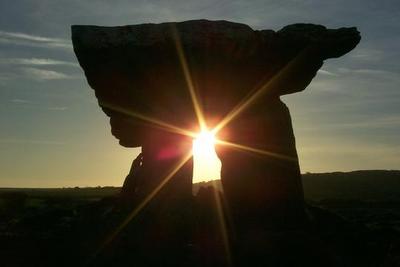
Poulnaborne Dolman
The sun rises, the sun falls
And all year long
We pray night and day
In hopes of a full harvest this fall
We plead and beg for no more rain
The rain damages our fields of wheat and grain
The sun god must give us his light
Light is needed to grow our crops
If only the rain god was not so angry
We would not have to worry about going hungry
Another prosperous generation has yet to come
And we should not waste time looking like scums
A fruitful harvest is all we ask
And in order for our wish to come true
We will perform our special task
Under our sacred tomb is where it will be
We sing and dance and chant our prayer
Will the gods be finally pleased?
We hope they will be happy with our special gift
A gift of flesh, blood, and soul

Jenny,
ReplyDeleteExcellent writing.
"He respected all religions and aimed to bring unity within diversity. Especially during the Hindu and Islam conflict, Gandhi felt it is wrong for both Hindus and Muslims to fight against each other. Furthermore, Gandhi was also constantly meditating, fasting, and praying to promote peace. In all, Gandhi used his religion to end major conflicts, promote peace, and encourage others to love their enemies." -Good job finding the connection between Gandhi's religious beliefs and his actions. The same for your own actions in yoga and meditation benefits.
Your poem is beautiful. It fulfills the requirements of perspective and incorporating prehistoric religious characteristics. Well done!
Jenny,
ReplyDeleteGood insights. Yes, we all need rest at times.