A Christmas Carol...?
" Little Drummer Boy"
During the break, I attended an event held by the Onnuri church that spotlighted Korean-Americans in general who had trouble fitting in either society. A few celebrities attended and performed as well and a small, humorous talk show was held towards the end that gave out various messages to learn from.
A Korean-American Saxophonist accompanied a vocalist in various Christmas carols and songs and one that caught my attention was the "Little Drummer Boy". The popular Christmas song was originally called "Carol of the Drums" and was written by the famous American classical musical composer, as well as teacher, Katherine Kennicott Davis in 1941. The song has both influenced and has been influenced by many different cultures. It is also similar to the story of the French legend in which a man plays his instrument in front of a statue of Virgin Mary and receives a smile, or in some versions, a rose.
The song tells of a story of a poor boy who appears before baby Jesus, being called forth by an unidentified someone. He is told that a new King is born, like many people were according to the Christmas story, comes to honor Him. (Like the Three Wise Kings/Men coming to Bethlehem upon hearing the news.) However, being poor, he has no gifts to give, and instead plays his drum with Virgin Mary's permission. The lyrics briefly mention the manger in the stable by describing the animals, "The ox and lamb kept time, pa rum pum pum pum". The song then ends with the Baby Jesus smiling at the boy and his drum.


The story takes place during the day Jesus was born in Bethlehem in a stable upon a manger. It's a famous story that has taken various different perspectives. Such as Luke mentioning solely shepherds arriving and Matthew supposedly adding in the Three Wise Kings/ Men. The story is in the scriptures, though specific details in the people such as a drummer boy, isn't mentioned.
Jesus plays the part of the new King, the new hope of the people as well as the Messiah they were waiting for. Though it is unlikely that the poor drummer boy is a nonfictional being, he represents most of the poor folk that had come to see Jesus resting in the manger. They were presented in front of what was the King, the Messiah, and yet had no physical gifts to give. They had most likely given something intangible, but much more priceless.
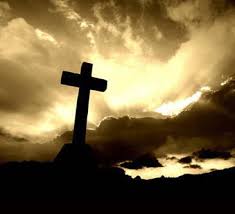 My Shema
God is
1) The people's light and goal
2) Almighty
3) Forgiving
4) Caring (a Parental figure)
5) The people's Savior.
I believed God to be this way through my experiences from watching the people around me go through hardships and always, always, revive by leaning on God.
I try to remember God and revere him by, at the least, giving thanks in prayer before meals and before I end the day. Some days I would have a QT and learn a passage from the Bible and understand it.
My Shema:
Heavenly Father, You are forgiving, almighty, caring, our savior, and my leading light and goal. I go to You when I'm lost but I shall try to reach You even when I'm not. I thank You for your blessings and Your protection. May you live within me forever."
Reflection #3 - Following the Path to Enlightenment
| The Dharma Wheel (8 Fold Path) |
| The Bongwon Temple |
Reflection #2 - Hinduism in Action
| Mohandas Gandhi |
This seems to be one of, if not the only, quote that solely supports Gandhi's beliefs throughout the movie. Meaning, the quote seems to be a way for Gandhi to support himself when he is in doubt or as he says "When I despair...". We first see Gandhi tell this to the a high official who seems to question Gandhi's bold, and determined actions. He is in the midst of being released from jail and is questioned about his intentions and what justifies his goal. Gandhi seems thoroughly confident that eventually the tyrants - the British - would move out from India in the end. Gandhi could possibly be influenced by the idea of Karma and how by behaving in evil manners, the individual will receive the same. Also Hinduism does follow the general path of good morality. The whole life - a majority of it - of Gandhi's cause was dedicated to many beliefs but this was one of his most prominent. It is even more emphasized when Gandhi's voice is heard saying the words again at the end of the movie where the ashes of his body is sprinkled over the river. The quote can't exactly be shown through Gandhi's actions directly but it is implied since the time he says those words that it is what he lives with.
"I am a Muslim, and a Hindu, and a Christian and a Jew; and so are you."
Gandhi speaks these words when he confronts the doubts and complaints of one of his disciples.His Hindu disciples were showing signs of unrest when Gandhi took favor of the Muslim people as well. Though it is well known that Gandhi defined himself with the weak the Hindus, who were Gandhi's original religion, felt betrayed. He could most likely have been influenced by how tolerable Hinduism is to other religions. Due to its nature for being mixed and influenced with many other religions and ethnicities. Gandhi supports this largely when he does not discriminate or differentiate any one side of the people. He refers to everyone as one nation and one country and this quote would ultimately summarize his thoughts. This can be especially seen when he desires for Muslims and Hindus to live together in harmony because he deeply believed that they really were no different. It is also hinted around the movie that he doesn't think themselves much different from the British except for one being oppressed and one doing the oppressing.
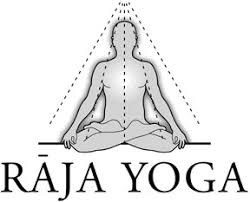 Here in Korea, Yoga is simply a way for women to loose weight or make a fitting body line for themselves. It is a form of physical activity and sometimes a method of bringing about calm. But when we began Yoga in class, I experienced a different type of Yoga than I was used to. The Mr. Harsh emphasized the use of breathing in Yoga exercises. He made us remember the breathing count and stressed on breathing in and out at the right times. I wasn't sure why at first, but as we did more and more stances and exercises I did feel more...peaceful and the people around me seemed to melt away from my vision - in a sense. In the Hindu religion, Yoga is a sacred ritual in which people achieve a spiritual purpose. The Yoga we experienced - Raja Yoga - was intended to be able to discipline the mind and body. When we had all laid down on the floor for five minutes of quiet peace I began to understand this Yoga's purpose. I was especially surprised when the lights were turned back on and we were told we had laid down for only five minutes. When the Mr. Harsh slowly told us to relax certain parts of the body I slowly began to feel more relaxed and at ease. My mind - which I believe I understand now - seemed more at peace than it did when we had all gathered before class. I could see that in Hinduism, Yoga would be another way to reach that Ultimate Reality. It could be a way to find the Atman and achieve whatever intended spiritual purpose it is tied to.
Gandhi speaks these words when he confronts the doubts and complaints of one of his disciples.His Hindu disciples were showing signs of unrest when Gandhi took favor of the Muslim people as well. Though it is well known that Gandhi defined himself with the weak the Hindus, who were Gandhi's original religion, felt betrayed. He could most likely have been influenced by how tolerable Hinduism is to other religions. Due to its nature for being mixed and influenced with many other religions and ethnicities. Gandhi supports this largely when he does not discriminate or differentiate any one side of the people. He refers to everyone as one nation and one country and this quote would ultimately summarize his thoughts. This can be especially seen when he desires for Muslims and Hindus to live together in harmony because he deeply believed that they really were no different. It is also hinted around the movie that he doesn't think themselves much different from the British except for one being oppressed and one doing the oppressing.
Yoga
The Moai in Easter Island

Faces of those who have left us
Still wander among our people
Their heads held high
Their pride and wisdom protect us
When their lights flicker off
All goes to the mountain
Where we carve the saved souls
From the rock-hard ash
Chief, long-ears, and short-ears
All travel down the hill
To the sea so that they may
Reach the end of the horizon
Ancestors, go travel far from here,
The place you were born.
Find life outside and discover
Wonders that are surely there.
Find different paths from your previous lives
So that we may prosper without worry
So that one day you can come back
And tell us the knowledge you have attained

Hyunna,
ReplyDeleteExcellent poem and use of prehistoric religion characteristics and perspective.
Hyunna,
ReplyDeleteExcellent reflection. You put the quotes in context within the film, you connected Gandhi's Hindu beliefs with his political choices and you also saw the importance of yoga as a Hindu ritual. Very well done!
Hyunna,
ReplyDeleteBuddhism is "far from worship"- excellent point. And so right...wouldn't worship imply desire? Great insights on the differences between "religion" and "ways of life".